Trane Buying Guide for West Covina Homes
Last updated 2026-06-13. Costs are typical 2026 SoCal ranges; verify current rebate amounts before you sign.
The straight version: This West Covina Trane buying guide lays the XR, XL and XV20i tiers side by side with the 2026 SEER2 floors and the LADWP and SCE rebate picture - so call West Covina Trane HVAC at (213) 444-4051 or book online for a Galaxie or South Hills (91791) install sized by Manual J. We are independent.
Plain facts
- Southwest-region floor for a split AC under 45,000 BTU: 14.3 SEER2 / 11.7 EER2.
- A split heat pump cannot drop below 14.3 SEER2 and 7.5 HSPF2 nationally.
- Trane tiers: XR single-stage (value), XL two-stage (enhanced), XV20i variable-speed (~20.5 SEER2 premium).
- Central AC replacement $5,000 to $12,000; ducted heat pump $6,000 to $16,000; furnace $3,000 to $7,500.
- The federal 25C tax credit lapsed on 12/31/2025 and does nothing for a 2026 install.
- Worth checking live: LADWP, SCE, SoCalGas HEER, TECH Clean California (all funding-phase driven).
- In Title-24 Zone 9, most jobs trigger refrigerant-charge / airflow verification plus HERS duct testing.
- We size off a Manual J load calc, never a per-square-foot guess.
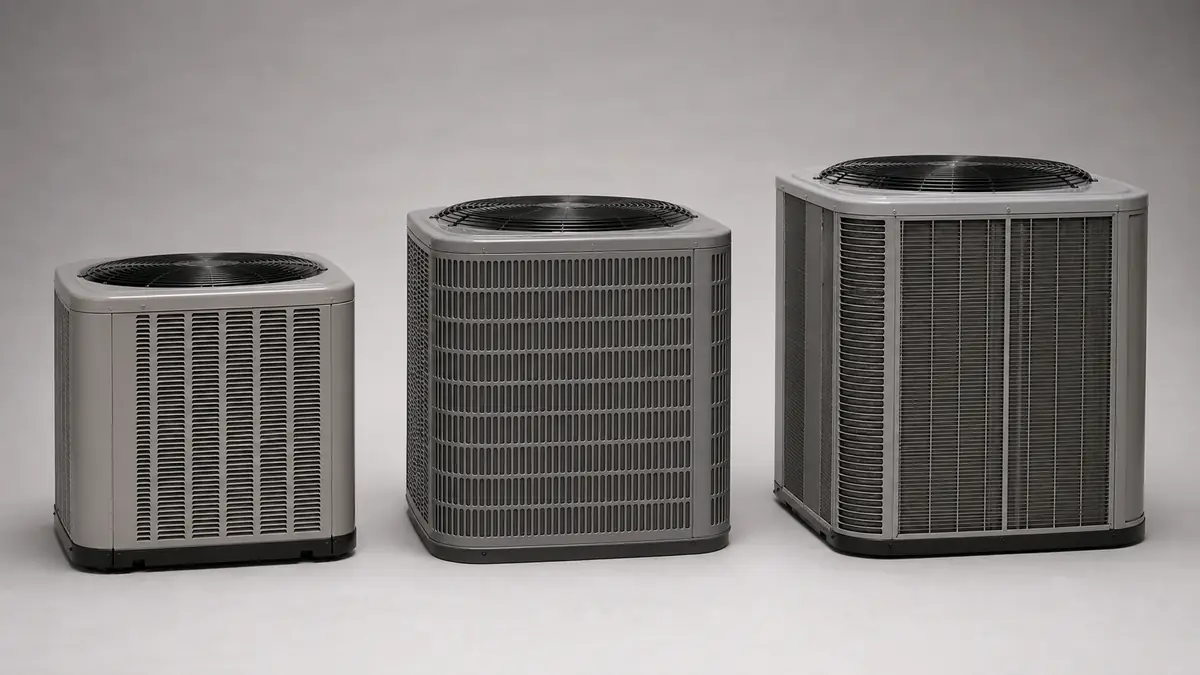
Which Trane tier should a West Covina home buy?
Match the system to the house, not the marketing. West Covina splits into two buying patterns: the post-war Galaxie, Merlinda and Vincent tract homes, where a value single-stage condenser sized correctly already covers nearly all the comfort a family will notice, and the newer two-story South Hills estates, where modulation and zoning earn their cost. Trane builds three residential tiers, all around the durable Climatuff compressor and all-aluminum Spine Fin coil.
| Tier | Models | Best fit | Installed lane |
|---|---|---|---|
| XR single-stage (value) | XR14 / XR16 / XR17 | Single-story tract homes, budget-first | $5,000 - $8,000 |
| XL two-stage (enhanced) | XL18i | Larger ranches, mid-size two-story | $7,000 - $10,000 |
| XV20i variable-speed (premium) | 4TTV0 / 4TWV0 | South Hills estates, zoning, lowest bills | $9,000 - $13,500 |
The middle tier is the one most homeowners overlook. An XL18i two-stage runs longer and quieter than a single-stage XR for a few thousand less than a variable-speed XV20i, and it suits the larger Woodside Village ranch perfectly.
What does SEER2 mean for a 2026 purchase?
Back in January 2023 the DOE swapped SEER for SEER2, scoring equipment against a tougher external-static-pressure bench test. Because West Covina lands in the Southwest region - the strictest of the three for cooling - the rules bite hardest here: a split AC under 45,000 BTU has to land at 14.3 SEER2 / 11.7 EER2 or better, while the same unit at 45,000 BTU and up drops to 13.8 SEER2 / 11.2 EER2. For heat pumps the number to clear is 14.3 SEER2 and 7.5 HSPF2. Treat all of those as the basement, not the goal: in our Zone 9 summers the extra SEER2 you pay for tends to earn itself back over the cooling season, and the higher tiers are what open the richer rebate brackets.
| Equipment | Minimum | Typical Trane reach |
|---|---|---|
| Split AC under 45k BTU | 14.3 SEER2 / 11.7 EER2 | XR ~14-17, XV20i ~20.5 SEER2 |
| Split AC 45k BTU and up | 13.8 SEER2 / 11.2 EER2 | Varies by capacity |
| Split heat pump | 14.3 SEER2 / 7.5 HSPF2 | XR baseline, 4TWV0 top tier |
How big a Trane should a West Covina home actually buy?
Almost every sizing mistake in West Covina leans the same way - too much capacity. The tired square-foot rule of thumb of one ton per 400 to 600 square feet routinely lands a home with more tonnage than it needs, and a single-stage condenser carrying that excess satisfies the thermostat too fast, cycles off before it has pulled any humidity out of the air, and grinds its compressor down sooner. A proper Manual J load calculation weighs everything the square-foot shortcut skips: insulation level, window area and orientation, ceiling height, duct losses, and the Zone 9 design temperature. In practice the post-war Galaxie and Merlinda tracts usually want less capacity than the oversized units bolted on during the last replacement, while a two-story South Hills estate behind west-facing glass can honestly carry more.
A worked example makes it concrete. Take a 1,600-square-foot single-story Galaxie ranch built in the 1960s, attic ducts, decent retrofit insulation. The square-foot rule lands somewhere near 4 tons; a Manual J on the same house, accounting for shade trees and the modest window area, lands at about 2.5 to 3 tons. Drop in the 4-ton and it slams the thermostat satisfied in six minutes, shuts down, then fires again a few minutes later for the rest of the afternoon - exactly the cycle-and-stall pattern that breeds short cycling and the clammy-air complaints that follow it. Fit the right-sized 3-ton XR or XL instead and it settles into longer, calmer runs that finally pull the back bedrooms even with the rest of the house. The bigger number on the invoice is not the comfort win here; the right number is.
| Home | Square-foot guess | Typical Manual J result | Why the gap |
|---|---|---|---|
| 1,600 sq ft Galaxie ranch, 1960s | ~4 tons | ~2.5-3 tons | Shade, modest glass, retrofit insulation |
| 2,000 sq ft Vincent tract, leaky ducts | ~4-5 tons | ~3-3.5 tons + duct sealing | Fix duct losses instead of adding tonnage |
| 3,400 sq ft South Hills two-story, west glass | ~6 tons | ~4-5 tons, often zoned | Real load from large west-facing windows |
The lesson the table teaches: on a leaky-duct Vincent home, the answer to weak cooling is usually sealing the ductwork, not buying a ton more capacity that just short cycles harder. We run the load calc first, every time.
How do the Trane tiers pencil out over ten years?
Sticker price is only half the decision; the operating cost over the equipment's life is the other half, and in a Zone 9 cooling climate it matters more than at the coast. Walk a single home through the three tiers. A value XR single-stage at roughly $5,000 to $8,000 installed cools fine but runs flat-out or off, so on a 96 F afternoon it is loud and the bills are higher. An XL18i two-stage at about $7,000 to $10,000 spends most of its hours on low stage, quieter and steadier, trimming the cooling bill in a long summer. A variable-speed XV20i at $9,000 to $13,500 modulates continuously up to about 20.5 SEER2, holds the tightest temperature, and runs the lowest bills - but only earns that premium on a larger or two-story home with real runtime and ideally zoning.
The honest framing: on a modest single-story tract home that runs maybe 1,200 cooling hours a year, the XV20i's efficiency edge will not repay its premium before the warranty is up, so the XR or XL is the smart buy. On a 3,400-square-foot South Hills estate running far more hours with hot upstairs zones, the XV20i's modulation and comfort genuinely justify the spend. Match the tier to how hard the house actually runs the system, not to the brochure.
What rebates are real in West Covina right now?
Nowhere does straight talk matter more, since these programs swing with their funding cycles. Early in 2026 a number of them were already reported reserved or waitlisted, so read every figure in the table as "confirm it before you sign anything." We check the live payout and your specific utility eligibility before a number lands in your quote.
| Program | Covers | Reported amount |
|---|---|---|
| LADWP heat pump rebate | Qualifying high-efficiency heat-pump HVAC | Up to ~$2,500/ton, tiered (verify) |
| SCE building electrification | Heat-pump HVAC replacing gas/propane | ~$1,000/system, up to 2 (verify) |
| SoCalGas HEER | 92%+ AFUE furnaces, smart thermostats | Up to ~$600 furnace, ~$50 thermostat (verify) |
| TECH Clean California | Heat-pump HVAC / water heaters | ~$1,000-$1,500 market-rate (often reserved) |
| Federal 25C tax credit | Heat pumps and efficiency upgrades | EXPIRED 12/31/2025 - none for 2026 |
One caveat outranks the rest: Congress ended the federal Section 25C credit as of December 31, 2025. So if a contractor is still dangling a $2,000 federal heat-pump credit on a 2026 job, that pitch is running on outdated info - walk it back. And do not be misled by 3C-REN or BayREN write-ups either; those serve other parts of the state and never extended into Los Angeles County, West Covina included.
What does the Title-24 process add to my install?
Swap a split system here in Climate Zone 9 and the city treats it as a permitted alteration. California Title-24, Part 6 then has us prove refrigerant charge and airflow on the new equipment, and on most duct changes it puts an independent HERS rater on the job to field-test for leakage. That certificate is the thing cut-rate crews quietly skip - and the thing a buyer's inspector asks for years later. We file the permit, line up the rater, and put the paperwork in your hands. When the ducts are the leaky 1960s tract kind, folding the sealing into the same visit is the highest-return dollar you will spend.
Furnace, AC, or full heat-pump conversion?
Because Zone 9 winters stay mild around West Covina, an 80 percent gas furnace still carries most homes, so a separate furnace-and-AC pair remains a legitimate budget route. When both are wearing out together, though, one heat pump conversion takes the place of both units and can stack the utility rebates on top. Pencil it out against your gas bill and the rebate you have actually verified before you commit. Whichever route you pick, the load calc still drives it - put in more tonnage than the house calls for and the system short cycles, leaves the air damp, and turns into the very oversizing job we spend our weeks reversing across West Covina.
Common questions
What SEER2 do I legally have to buy in West Covina in 2026?
West Covina falls inside the DOE Southwest region, which DOE holds to the toughest cooling bar in the country. The practical floor here: a split AC below 45,000 BTU has to clear 14.3 SEER2 / 11.7 EER2, and a split heat pump has to clear 14.3 SEER2 / 7.5 HSPF2. Plenty of owners buy past that for the comfort and the better rebate brackets, but legally that is the bottom rung.
Is the federal heat pump tax credit still available?
No. Lawmakers repealed the federal Section 25C credit - the one worth 30 percent up to $2,000 on a heat pump - as of December 31, 2025. You can still claim it on the 2025 return only if the gear was bought and put in on or before that day. Nothing carries into a 2026 install, so leave it out of your West Covina budget.
Which Trane tier is right for a single-story Galaxie ranch?
Usually a single-stage XR or, if you want quieter and steadier cooling, an XL two-stage. A variable-speed XV20i is built for large two-story homes with zoning; on a modest single-story tract home it is more system than the house can use.
Do rebates actually cover much of a heat pump install?
A few thousand off is realistic, but the dollar figures move and a chunk of the programs were sitting reserved or waitlisted in early 2026. Rather than quote you a number that has gone stale, we pull up the live LADWP, SCE, SoCalGas and TECH Clean California status the week we write your estimate.
Should I match a new condenser to my old coil to save money?
No. A mismatched coil prevents the system from verifying charge and airflow under Title-24, hurts efficiency, and can void warranty coverage. On older West Covina systems we replace the condenser and evaporator coil as a matched Trane pair.