Trane AC Making Strange Noises in West Covina
The straight version: A Trane AC making strange noises in West Covina, CA - buzzing, humming, clicking, screeching or rattling - points to a specific failing part, so call West Covina Trane HVAC at (213) 444-4051 or book online to read the sound across South Hills, Galaxie and Vincent (91790). We are independent.
Plain facts
- Hum with a dead fan = failed start/run capacitor (most common, $150 to $450).
- Rapid clicking with no start = pitted contactor (often replaced with the capacitor).
- Squeal indoors = blower bearing or failing ECM motor.
- High-pitched scream outdoors = compressor under high pressure - shut it off.
- Rattle = loose hardware, debris, or a bent fan blade (Santa Ana dust is a factor here).
- Buzzing while stalled overheats the Climatuff compressor - do not let it run.
- Service area: West Covina (91790-91793). Independent; diagnostic $79 to $200, credited.
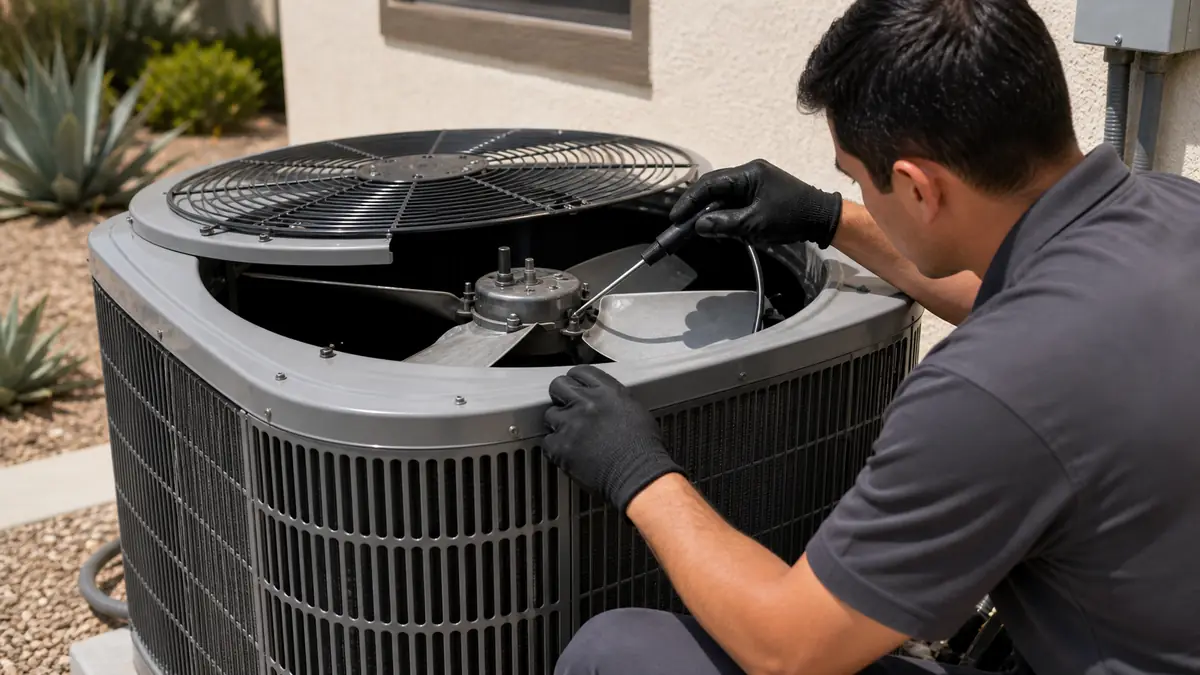
What does each AC noise mean on a Trane unit?
Sound is a fast diagnostic. The classic West Covina call is a condenser that hums or buzzes while the fan sits dead - that is a failed dual-run capacitor, the top failure under Zone 9 heat, and letting it hum cooks the compressor. Rapid clicking that never starts the unit is a pitted contactor; we usually meter and replace both together. A squeal points indoors to the blower bearing or a failing ECM motor, while a metallic rattle outdoors is typically loose hardware or debris that Santa Ana winds dropped into the cabinet.
| Sound | Likely cause / first check | Cost lane |
|---|---|---|
| Hum / buzz, fan dead | Failed dual-run capacitor | $150 - $450 |
| Rapid clicking, no start | Pitted / welded contactor | $150 - $450 |
| Squeal from indoor unit | Blower bearing or failing ECM motor | $450 - $2,300 |
| Scream / high pitch outdoors | Compressor high pressure - stop now | $1,200 - $3,500 |
| Rattle / clank outdoors | Loose hardware, debris, bent fan blade | $120 - $400 |
Which noises mean shut it off right now?
Two. A buzz or hum with a stalled fan or compressor means the capacitor failed and the motor is drawing locked-rotor current - every minute risks burning the windings, so kill the breaker and call. And a sudden high-pitched scream from the outdoor unit can be the Climatuff compressor going into high-pressure protection; running it can finish off a $1,200-to-$3,500 part. A normal hum that cools fine is fine; it is the hum-without-cooling that is the emergency.
How does a tech track down the noise step by step?
We locate the sound before we open anything, because where it comes from narrows the part. Outdoor hum or buzz with a dead fan goes straight to an electrical test: a microfarad reading on the dual-run capacitor against the nameplate, then a contactor check, since the two fail together in Zone 9 heat. A high-pitched outdoor scream means we shut the unit down first and check head pressure - the Climatuff compressor going into high-pressure protection is a stop-now situation, not something to keep diagnosing while it runs. Indoor squeals send us to the blower: a worn motor bearing, or on a variable-speed system a failing ECM motor and module, which we meter directly. A rattle gets a visual - loose hardware, a bent fan blade, or Santa Ana debris in the cabinet, common on West Covina condensers exposed to the inland winds. Each sound maps to a measurement, so we are not replacing parts on a hunch.
Most of these are non-communicating diagnoses with no numeric code; the noise itself is the signal. On a communicating XV system the XL850 may add a plain-language alert that confirms which component is failing.
What about noises that are not urgent, and what can I check?
Homeowner-safe: with the breaker off, look for obvious loose hardware or debris in the outdoor cabinet and clear it, and note exactly when the sound happens (startup, running, shutdown) so the tech can route it. A light rattle from debris, a single startup click, or a brief pop from ductwork expanding are usually harmless - though duct pops can hint at undersized tract ducts flexing under pressure. What needs a pro: anything electrical (the capacitor holds a dangerous charge), any compressor or refrigerant noise, and any blower-bearing or ECM diagnosis. If the noise comes with weak cooling it may pair with weak airflow or short cycling. When in doubt, we would rather check a $150 capacitor than have you replace a $1,200-to-$3,500 compressor - book a diagnostic.
Common questions
My Trane condenser buzzes but the fan will not spin. Is that dangerous?
That hum with a dead fan is the signature of a failed start/run capacitor, and yes, leaving it humming overheats the compressor windings. Shut it off and call - a $150 to $450 capacitor now is far cheaper than a compressor cooked by hours of stall current.
What is the loud clicking before my AC starts?
A single clean click is the contactor pulling in - normal. Rapid or repeated clicking that never starts the compressor is a pitted contactor or a control issue. We meter the contactor and capacitor together since they often fail as a pair in Zone 9 heat.
There is a screech or squeal from the indoor unit. What is it?
A squeal usually comes from the blower - a worn bearing, a slipping belt on older units, or a failing ECM motor. A high-pitched scream from the outdoor unit can be a failing compressor under high pressure, which is a stop-now situation.
Should I worry about a rattling outdoor unit?
A rattle is often loose hardware, a bent fan blade, or debris in the cabinet - the dusty Santa Ana conditions in West Covina drop plenty into condensers. It is usually minor, but a rattle that becomes a grinding or buzzing can signal a failing fan motor bearing.